Trauma-informed care changed the conversation. It helped us recognize that behavior often has a story behind it. But awareness alone doesn’t change a nervous system, a classroom, a courtroom, or a community.
At the St. Clair Butterfly Foundation, we go further. We help you understand what is happening in the brain and body when stress and trauma take over, and then give you practical tools to respond differently.
Because awareness can change how we see a problem. The right tools can change what happens next.
When someone is angry, disruptive, withdrawn, or acting out, it’s easy to focus on the behavior. And that’s usually where we start trying to fix things. But behavior is often the last step in a much bigger process.
Something happens → The brain perceives a threat → The nervous system reacts → The body prepares to respond → And then we see the behavior.
SCBF works earlier in that process. Instead of asking only, “How do we stop this behavior?” we ask: “What is happening underneath it, and what tools can help?”
That simple shift changes the way we understand people, the way we respond to them, and ultimately the way our systems work.

When emotions run high, thinking clearly can be hard. The Butterfly Labyrinth™ gives people a way to slow things down. Through a series of simple, intentional steps, people learn to notice what they’re feeling, understand what’s happening inside them, reconnect with themselves and others, and find a way forward.
It’s a little like giving the brain a chance to catch its breath. Breathe. Understand. Connect. Think. Choose. Grow. The goal isn’t simply to feel better in the moment. It’s to build a pathway people can use again and again.
We often talk about behavior as if people simply choose it. But the brain has a say, too. When we feel safe, we have more capacity to listen, learn, solve problems, manage emotions, and connect with other people. When we feel threatened or overwhelmed, those abilities can become much harder to access.
That’s where neuroscience and social emotional learning come together. SCBF uses what we know about the brain to help people develop skills they can actually use in real life.
Imagine trying to have an important conversation while a fire alarm is blaring. You might technically be able to hear the other person. But you’re probably not going to be at your best.
The brain can work much the same way when the nervous system is overwhelmed. Learning, problem solving, communication, and decision making become harder when the brain is focused on protection. That’s why regulation matters.
We help you recognize what’s happening before a difficult moment becomes a crisis and build tools that help bring the nervous system back into a place where thinking, learning, and connecting are possible.
Regulation creates room for possibility.
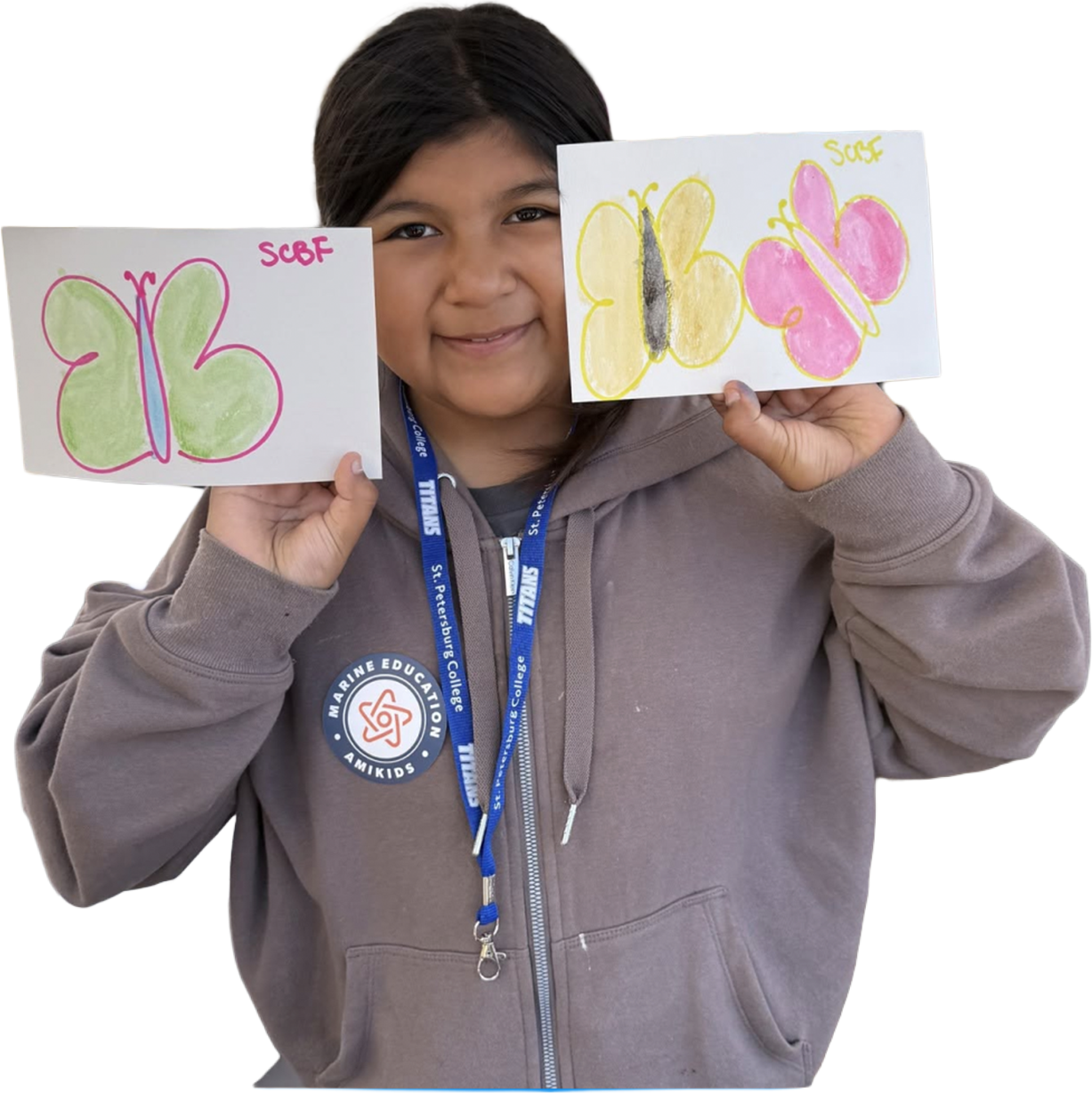
Not everything we experience is easy to explain. Sometimes we draw it. Write it. Move through it. Make music. Spend time in nature.
Expressive arts give people another way to understand what they’re feeling and experiencing. We use creativity as a tool for regulation, awareness, connection, problem solving, and growth. Because sometimes the best way to help someone find a new way forward isn’t to ask them for the right words. It’s to give them another way in.
The goal isn’t simply to stop bad behavior. It’s to create environments where people have a better chance to succeed in the first place. That can mean calmer classrooms, more confident educators and leaders, fewer escalations, stronger relationships, better engagement, and more consistent responses.
And over time, those individual changes can create something bigger. Where you’re spending less time reacting to problems and more time helping people grow.
When you change what happens underneath the behavior, you can change what happens next.
Tell us what you’re seeing, what isn’t working, and what you want to change.
We’ll help you find the right tools to move forward.
Copyright © 2026. All Rights Reserved. | Terms of Use | Privacy